AR 106: Research Methods in Applied and Computational Sciences
About Course
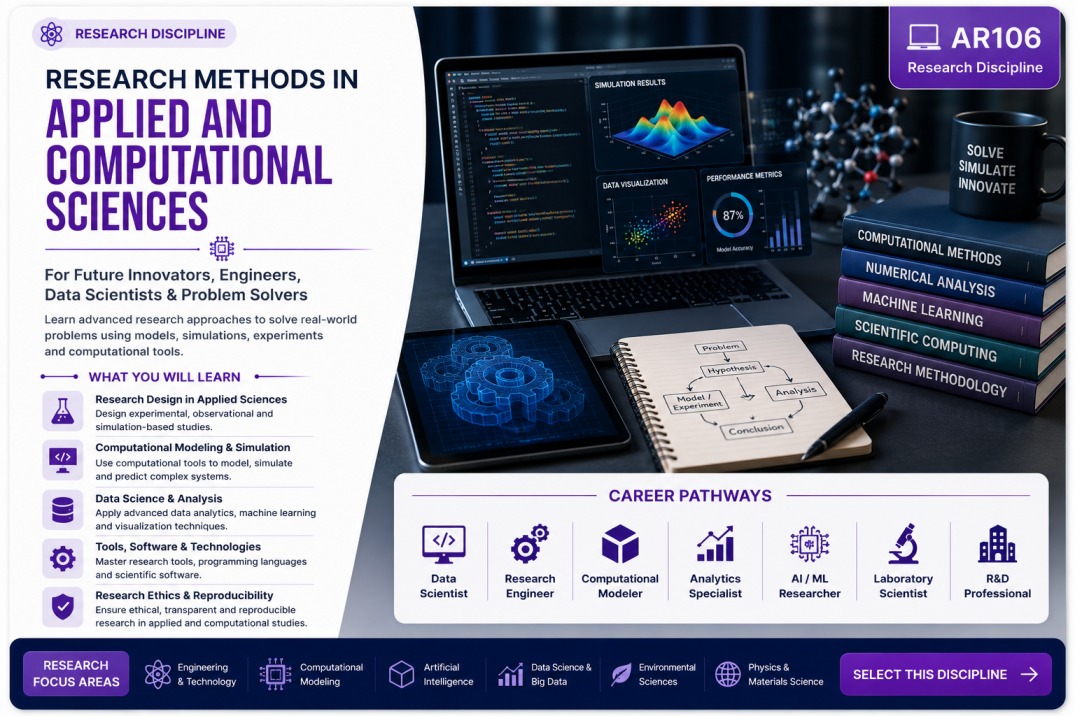
Research Methods in Applied and Computational Sciences (AR106)
Course Overview
Scientific discovery and technological innovation are increasingly driven by data, computation, and systematic experimentation. Research Methods in Applied and Computational Sciences equips students with the skills needed to investigate complex problems, develop innovative solutions, and generate evidence using scientific and computational approaches.
This course introduces students to the principles and methods used in applied scientific research, computational investigations, and technology-driven problem-solving. Students will learn how to design research projects, collect and analyze data, evaluate results, and communicate findings effectively.
The course is particularly valuable for students interested in computing, engineering, data science, artificial intelligence, mathematics, environmental sciences, and other fields where scientific inquiry and computational thinking play a central role.
Whether your goal is to conduct scientific research, build innovative technologies, analyze complex datasets, or solve real-world challenges, this course provides the research foundation needed to succeed.
What You Will Learn
Foundations of Scientific and Computational Research
-
Understand the role of research in scientific discovery and innovation
-
Explore scientific inquiry, experimentation, and computational problem-solving
-
Develop research questions, hypotheses, and objectives
Research Design and Methodology
-
Design scientific and computational research studies
-
Select appropriate research methods and analytical approaches
-
Develop research proposals and project plans
Data Collection and Management
-
Gather experimental, observational, and computational data
-
Apply data quality and management principles
-
Organize datasets for analysis and interpretation
Computational Thinking and Problem Solving
-
Apply logical reasoning to research challenges
-
Use computational approaches to investigate problems
-
Understand modeling, simulation, and algorithmic thinking
Data Analysis and Interpretation
-
Analyze quantitative data using appropriate techniques
-
Interpret scientific and computational findings
-
Draw evidence-based conclusions and recommendations
Innovation and Applied Research
-
Investigate real-world scientific and technological challenges
-
Evaluate solutions and interventions
-
Understand the research process behind innovation and product development
Research Ethics and Responsible Innovation
-
Apply ethical principles in scientific research
-
Understand responsible use of technology and data
-
Maintain integrity and transparency in research activities
Scientific Communication
-
Write scientific reports and technical documents
-
Present findings to academic, professional, and public audiences
-
Communicate complex information clearly and effectively
Who This Course Is For
This course is ideal for:
-
Computer Science students
-
Information Technology students
-
Engineering students
-
Data Science students
-
Artificial Intelligence enthusiasts
-
Mathematics and Statistics students
-
Environmental Science students
-
Technology innovators and entrepreneurs
-
Researchers interested in scientific and computational inquiry
No prior research experience is required.
How You Will Learn
Duration
3 Months
Format
Hybrid, combining engaging online lessons with interactive in-person classes.
Learning Style
Practical, hands-on, and student-paced, with real datasets, computational exercises, scientific case studies, innovation projects, and personalized feedback from instructors.
Throughout the Course You Will:
-
Explore real scientific and technological challenges
-
Analyze datasets and research evidence
-
Develop problem-solving and analytical skills
-
Design and evaluate research projects
-
Learn how innovation emerges from systematic inquiry
-
Complete a mini applied or computational research project from proposal to final report
Learning Outcomes
Upon successful completion of this course, you will be able to:
-
Design and conduct applied scientific research
-
Apply computational thinking to research challenges
-
Collect, analyze, and interpret quantitative data
-
Evaluate scientific and technological solutions
-
Communicate research findings effectively
-
Contribute to innovation, problem-solving, and evidence-based decision-making
Course Code
AR106
Research Discipline
Applied and Computational Sciences
Available In
Basic Research Program, Advanced Research Program, and Premium Research Program
Student Ratings & Reviews